Cambridge teams in the international Genetically Engineered Machine (iGEM) competition
iGEM is an international synthetic biology competition where student teams are given access to DNA parts from the Registry of Standard Biological Parts. The aim is to use these and other new parts to design and construct new biological systems and operate them in living cells. (see: http://igem.org). Cambridge provided the first team from the UK, and since 2005, there has been wide interdisciplinary support for a University of Cambridge team in the iGEM competition. The competition provides a practical, laboratory based experience, with a focus on bottom-up design and assembly techniques, standardised biological components and cellular devices. iGEM2016 saw the introduction of a new cross-track award for the engineering of plants and a new standard for DNA parts in the competition.
Below is a listing of links to background information and information about earlier team efforts in Cambridge.
Below is a listing of links to background information and information about earlier team efforts in Cambridge.
iGEM Teams from Cambridge
Details of projects from previous years can be found here:
iGEM2025 - CamiRa: cheap and fast on-farm crop diagnosis
iGEM2024 - Magenta: Magnetic gene targeting
iGEM2023 - Engineered protective biofilms to combat harmful biofilms
iGEM2022 - AdaptR: integral controller to facilitate robustness in synthetic genetic circuits
iGEM2016 - InstaChlam: a toolbox for chloroplast engineering
iGEM2015 - Low cost 3D printed automated microscope
iGEM2014 - Marchantia for synthetic biosensor plants
iGEM2012 - New standards for biosensor development
iGEM2011 - Reflectins for creating iridescent biological systems
iGEM2010 - E. glowli, new bioluminescent systems
iGEM2009 - E. chromi, multispectral biopigments for biosensors
iGEM2008 - iBrain, electrical signalling and communication
iGEM2007 - Bacteria Online, microbial patterning
iGEM2006 - Self-organisation in bacteria populations
iGEM2005 - Artificial chemotaxis
iGEM2025 - CamiRa: cheap and fast on-farm crop diagnosis
iGEM2024 - Magenta: Magnetic gene targeting
iGEM2023 - Engineered protective biofilms to combat harmful biofilms
iGEM2022 - AdaptR: integral controller to facilitate robustness in synthetic genetic circuits
iGEM2016 - InstaChlam: a toolbox for chloroplast engineering
iGEM2015 - Low cost 3D printed automated microscope
iGEM2014 - Marchantia for synthetic biosensor plants
iGEM2012 - New standards for biosensor development
iGEM2011 - Reflectins for creating iridescent biological systems
iGEM2010 - E. glowli, new bioluminescent systems
iGEM2009 - E. chromi, multispectral biopigments for biosensors
iGEM2008 - iBrain, electrical signalling and communication
iGEM2007 - Bacteria Online, microbial patterning
iGEM2006 - Self-organisation in bacteria populations
iGEM2005 - Artificial chemotaxis

iGEM2016: InstaChlam - a toolbox for chloroplast engineering
An ultra low-cost 3D-printed motorised web-streaming autofocus microscope for synthetic biologists, letting researchers tailor the microscope to their needs - allowing imaging on any lab-bench, in the incubator, fume-hood or the field using remote access and battery power, or use many OpenScopes for parallel rapid preliminary screening. A microscope for schools and laboratories with small budgets, based on low-cost and easily sourced components. Click here to view project wiki.

The 2016 team
Alexander Mayorov (Natural Sciences), Mie Monti (Natural Sciences), Anran Chen (Natural Sciences), Ciara McCarthy (Natural Sciences), Lucie Studena (Natural Sciences), Geoffrey Ma (Bioengineering), Michael Friedman (Bioengineering), CJ Ong (Mechanical Engineering), Jake Levi (General Engineering), Claire Restarick (General Engineering)

iGEM2015: OpenScope - an open source microscope
An ultra low-cost 3D-printed motorised web-streaming autofocus microscope for synthetic biologists, letting researchers tailor the microscope to their needs - allowing imaging on any lab-bench, in the incubator, fume-hood or the field using remote access and battery power, or use many OpenScopes for parallel rapid preliminary screening. A microscope for schools and laboratories with small budgets, based on low-cost and easily sourced components. Click here to view project wiki.
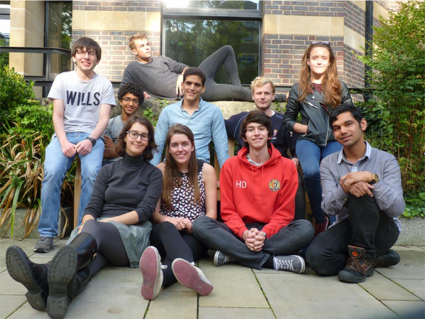
The 2015 team
William Earley (Biology), Rajiv Kurien (Engineering), María Fernández-Martos Balson (Engineering), Simon Swan (Biology), Olivia Murray Lala (Engineering), Lorenzo Venturini (Engineering), Ocean Haghighi-Daly (Biology), Atticus English (Biology), Katerina Naydenova (Biology/Physics), Souradip Mookerjee (Medicine)

iGEM2014: mösbi - a plant biosensor for everyone
mӧsbi stands for marchantia open-source biosensor. mӧsbi encapsulates the team's vision of creating a user-friendly, open-source biosensor using the liverwort Marchantia polymorpha. With its sturdy genetic framework and modularity, mӧsbi represents a new step in popularising synthetic biology and making it accessible to a large audience. Click here to view project wiki.

The 2014 team
Angelina Munabi (Engineering), Fergus Riche (Engineering), Ginny Rutten (Medicine), Guy Lewy (Biology), Hugh Wilson (Physics), Miha Pipan, (Biology), Salil Bhate (Maths), Trang-Anh Nghiem (Physics), Will Kaufhold (Biology/Physics)

iGEM2012: Sporduino
iGEM teams have characterised an array of biosensor components, but outputs are often inconsistent and, despite common assembly standards, it remains difficult to compose functional and precise biosensor circuits. The Cambridge iGEM 2012 team aimsed to create new standards for characterisation, validation and application of biosensors. The protocols aim to be modular in design, allowing any biosensor built to this standard and measured with low-cost instrumentation that we will prototype ourselves. Novel fluoride biosensors were adapted to use light as an output and interfaced with microcontroller electronics. Click here to view project wiki.

The 2012 team
Stuart Bell (Biology), Charlotte Bransfield-Garth (Biology), Jolyon Martin (Biology), Paul Mallaband (Engineering), Oliver Meacock (Biology), Andreas Petrides (Engineering), Emmy Tsang (Biology), Tom Whittaker (Biology)

iGEM2011: Bactiridescence
The Cambridge iGEM2011 team worked with bionanophotonic systems - experimenting with the use of self-assembling protein structures from squid that produce striking iridescence in vivo. They produced BioBrick compatible forms of squid reflection, expressed and purified the protein, and produced thin films with bright and dynamic reflectance properties (see right). The films responded in fractions of a second to physical changes, such as humidity-induced film swelling. Reflectins form a new class of potential biosensors with radically improved properties. The team also produced improved software for Gibson Assembly, with an interface to sequence libraries (including the iGEM Registry), graphical construction tool and automated PDF output of oligo design and experimental protocol. Click here to view project wiki.

The 2011 team
Marta Bozek (Biology), Xin (Heather) Gao (Engineering), Joe Harvey (Mathematics), Matthew Jones (Biology), Haydn King (Engineering), Catriona McMurran (Biology), Jonathan Very (Biology), Katy Wei (Physics), Felix Zhou (Engineering)

iGEM2010 project: E. glowli
The Cambridge iGEM2010 team worked on regeneration systems for bioluminescence and better, brighter light output, different coloured luciferases, instrumentation for quantitation and modelling the feasibility of using bioluminescent trees as a replacement for street lamps. They also pushed technical boundaries, and promoted the adoption of advanced DNA assembly methods, which have emerged from Daniel Gibson's genome-scale synthesis work at the Venter Institute. Click here to view project wiki.

The 2010 team
Will Handley (Physics), Theo Sanderson (Biology), Peter Emmrich, (Biology), Paul Masset (Engineering), Hannah Copley (Medicine), Emily Knott, (Engineering), Bill Collins, (Engineering)
Benjamin Reeve (Biology), Anja Hohmann, (Biology).
Benjamin Reeve (Biology), Anja Hohmann, (Biology).

iGEM2009 project: E. chromi
The Cambridge iGEM2009 team created two kits of parts to facilitate the design and construction of biosensors in the the future. The team successfully characterised a set of transcriptional systems for calibrated output - Sensitivity Tuners, and successfully expressed a spectrum of pigments in E. coli, designing a set of colour generators. Click here to view project wiki.

The 2009 team
Michael Davies (Engineering), Shuna Gould (Biology), Siming Ma (Biology), Vivian Mullin (Biology), Megan Stanley (Physics), Alan Walbridge (Engineering), Crispian Wilson (Biology)

iGEM2008 project: iBrain
The Cambridge iGEM2008 team project aimed to set a foundation for future research in engineered multi-cellularity by pursuing electrical and peptide signalling in bacteria, and cellular self-differentiation through spontaneous spatial patterning. Click here to view project wiki.

The 2008 team
Linda Boettger (Visiting student from US), Marie Chapart (Visiting student from France), Kevin Cheng (Biology), Kathryn Chung (Biology, Cambridge), Daniel Goodman (Visiting student from US), Chris Hill (Biology), Rebecca Koenigsberg-Miles (Engineering), Arjun Mehta (Maths/Physics), Stefan Milde (Biology), Dmitriy Myelnikov (Biology), Ellis O'Neill (Biology), Ian (Yee Yen) Tang (Engineering), James Wu (Medicine), Xiao-Hu Yan (Maths)

iGEM2007 project: Bacteria-On-Line
In order to engineer interesting and useful functions in biology, a robust and extensive range of intra- and inter-cellular signalling pathways must be available. By analogy with the Internet, where adoption of the standard TCP/IP communication protocol has enabled worldwide connectivity from supercomputers to refrigerators, such a system must be accessible to cells of different heritage and structure (different “operating systems”) with the potential for processing messages received and taking action dependent on their content (see diagram at right). In the course of the project they identified and worked on candidates for both intracellular (PoPS Amplifier project) and intercellular (Peptide signalling project) communication pathways, and additionally made progress towards adding a new Gram-positive platform for synthetic biology to the Registry. Click here to view project wiki.

The 2007 team
Yi Han (Engineering), Narin Hengrung (Biology), Yi Jin Liew (Biology), Dmitry Malyshev (Biology), Stephanie May (Engineering), Yue Miao (Biology/Maths), Stefan Milde (Biology), Xinxuan (Sheila) Soh (Biology), Lovelace Soirez (Engineering), David Wyatt (Engineering), Zhizhen (Jane) Zhao (Physics).

iGEM2006 project: Self-organisation
Multicellular organisms undergo self-organisation during development. Our aim was to engineer self-organised pattern formation in free swimming bacteria cells by providing them with an artificial system allowing bi-directional communication. Escherichia coli cells would be equipped with genes derived from independent quorum sensing systems from Pseudomonas aeruginosa and Vibrio fischeri. These systems can enable communication between cell populations and regulated switching between competing cell fates. The negotiation of cell fates within bacterial populations can be visualised precisely by expression of different fluorescent proteins. We further sought to construct biological parts that would render possible the construction of a population based bi-stable switch and modelled the behaviour of single cells as well as the interactive behaviour of populations of cells containing these genetic circuits. Our experiments verified that differential cell motility in combination with position-dependent gene expression has the potential to generate complex patterns. Click here to view project wiki.

The 2006 team
Kaj Bernhardt (Biology), Elizabeth Carter (Biology), Nikhilesh Chand (Biology), Jisun Lee (Engineering), Yang Xu (Engineering), Xueni Zhu (Engineering)
iGEM2005 project: Metabolite to morphogen
The Cambridge iGEM2005 team explored a method to control chemotaxis using maltose regulation. Click here to view project wiki.

The 2005 team
James Brown (Engineering), Russell Brown (Chemistry, Oxford), Eva Cheng (Engineering), Chris Field (Engineering), James Godman (Biology), Alice Young (Biology)

iGEM-UC es un proyecto de la UC, que junto a la Universidad de Cambridge-UK, pretende traer esta nueva disciplina a Chile, permitiendo que se trabaje con los biobricks y se desarrolle Biología Sintética en nuestro país.
Fernan Federici has been shuttling between Cambridge and his alma mater, Universidad Catholica, Santiago, to help to run a course in Synthetic Biology and to set up Chile's first iGEM team - bringing the latest techniques in Gibson DNA assembly, biopigments and fluorescent proteins.
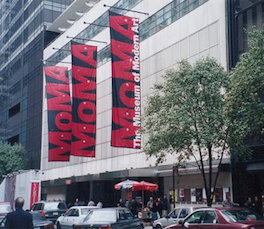
The University of Cambridge iGEM2009 team won the iGEM2009 Grand Prize after implementing schemes for the production of a rainbow of bio-pigments in living cells. The E. chromi project resulted from a deep collaboration between the team and Daisy Ginsberg and James King, graduate designers from the Royal College of Arts. The E. chromi concept continues its global tour with nominations for 2011 Design of the Year, 2011 INDEX: Design to Improve Life, award of best documentary at Bio:Fiction 2011 in Vienna, and exhibits in 2011 at the Design Museum, London, RiAus Life2.0 in Adelaide, Australia and with a forthcoming exhibit at the Museum of Modern Art, New York. (more details here)
iGEM2015: OpenScope - an open source microscope
An ultra low-cost 3D-printed motorised web-streaming autofocus microscope for synthetic biologists, letting researchers tailor the microscope to their needs - allowing imaging on any lab-bench, in the incubator, fume-hood or the field using remote access and battery power, or use many OpenScopes for parallel rapid preliminary screening. A microscope for schools and laboratories with small budgets, based on low-cost and easily sourced components. Click here to view project wiki.
The 2015 team
William Earley (Biology), Rajiv Kurien (Engineering), María Fernández-Martos Balson (Engineering), Simon Swan (Biology), Olivia Murray Lala (Engineering), Lorenzo Venturini (Engineering), Ocean Haghighi-Daly (Biology), Atticus English (Biology), Katerina Naydenova (Biology/Physics), Souradip Mookerjee (Medicine)