Introduction to Synthetic Biology
Three lectures from:
Genomics, Epigenetics & Synthetic Biology
Final year undergraduate course module in Plant Sciences, University of Cambridge
Prof. Jim Haseloff
Genomics, Epigenetics & Synthetic Biology
Final year undergraduate course module in Plant Sciences, University of Cambridge
Prof. Jim Haseloff
Download graphical notes
PDF containing thumbnail versions of the lecture slides and brief notes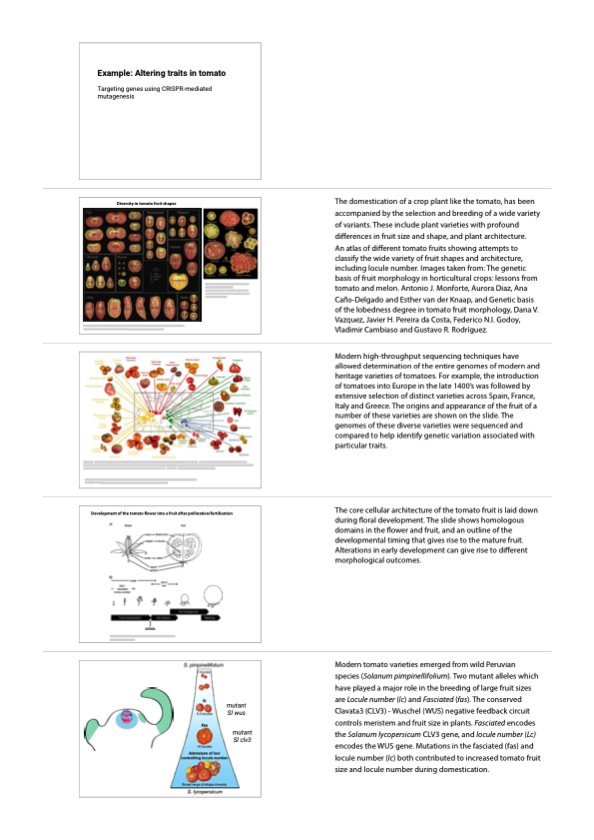

Lecture 1: Genetic modification in agriculture and the advent of Synthetic Biology
Summary of content:
Origins of modern crops
Selection and breeding of new crop varieties
Industrialisation of agriculture
Genetic modification (GM) for plant improvement
Genome editing
From science to engineering
Synthetic Biology
Click here to see slide show
Extended reading
Origin and emergence of the sweet dessert watermelon, Citrullus lanatus. Paris, H.S., 2015. Annals of Botany 116(2), pp.133–148.
Resequencing of 414 cultivated and wild watermelon accessions identifies selection for fruit quality traits. Guo et al. 2019 Nature Genetics 51: 1616-1623.
A chromosome-level genome of a Kordofan melon illuminates the origin of domesticated watermelons Renner et al. 2021 PNAS https://doi.org/10.1073/pnas.2101486118
GM plants: Questions and answers. Royal Society, 2016. p.40.
Global status of commercialised Biotech/GM crops: 2016, ISAAA Brief No. 52, 2016.
Synthetic biology: applications come of age. Khalil, A.S.S. & Collins, J.J.J., 2010. Nature Reviews Genetics, 11(5), pp.367–379.
Beyond natural: synthetic expansions of botanical form and function. Patron, N.J., 2020. New Phytologist 227:295-310
Idempotent Vector Design for Standard Assembly of Biobricks. Knight, T. 2003, DSpace@MIT ttp://hdl.handle.net/1721.1/2116
Origins of modern crops
Selection and breeding of new crop varieties
Industrialisation of agriculture
Genetic modification (GM) for plant improvement
Genome editing
From science to engineering
Synthetic Biology
Click here to see slide show
Extended reading
Origin and emergence of the sweet dessert watermelon, Citrullus lanatus. Paris, H.S., 2015. Annals of Botany 116(2), pp.133–148.
Resequencing of 414 cultivated and wild watermelon accessions identifies selection for fruit quality traits. Guo et al. 2019 Nature Genetics 51: 1616-1623.
A chromosome-level genome of a Kordofan melon illuminates the origin of domesticated watermelons Renner et al. 2021 PNAS https://doi.org/10.1073/pnas.2101486118
GM plants: Questions and answers. Royal Society, 2016. p.40.
Global status of commercialised Biotech/GM crops: 2016, ISAAA Brief No. 52, 2016.
Synthetic biology: applications come of age. Khalil, A.S.S. & Collins, J.J.J., 2010. Nature Reviews Genetics, 11(5), pp.367–379.
Beyond natural: synthetic expansions of botanical form and function. Patron, N.J., 2020. New Phytologist 227:295-310
Idempotent Vector Design for Standard Assembly of Biobricks. Knight, T. 2003, DSpace@MIT ttp://hdl.handle.net/1721.1/2116
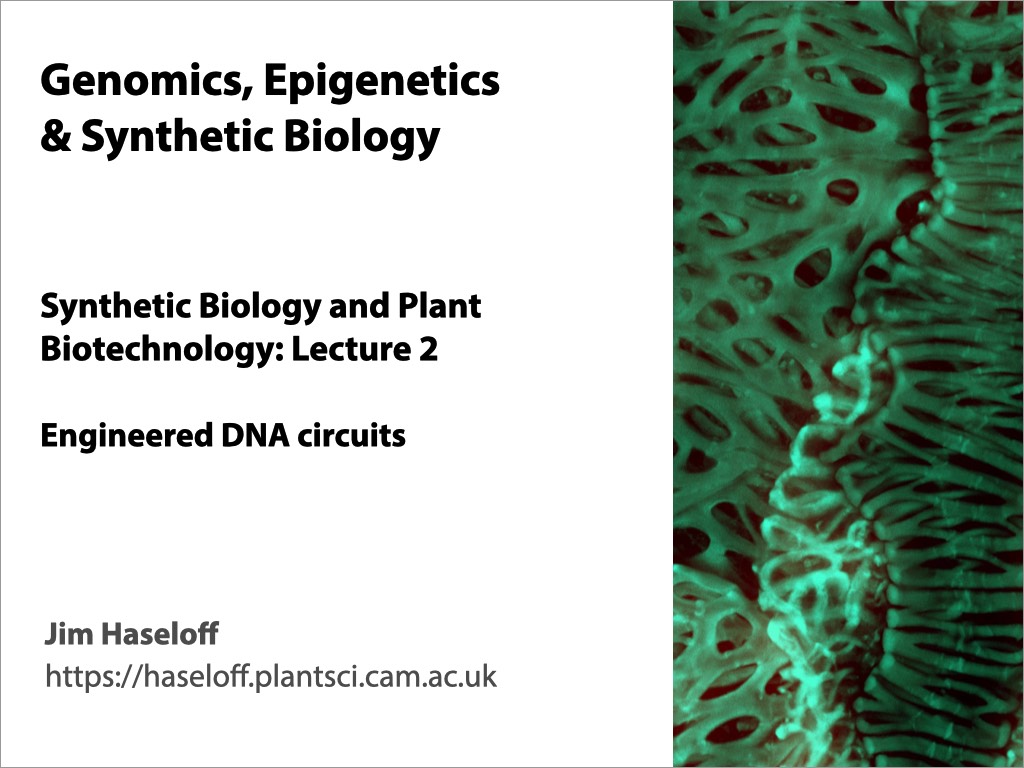
Lecture 2: Synthetic Biology and genome scale DNA engineering
Summary of content:
Microbial test systems
Feedback mediated regulation
Repressilator
Circuit optimisation
In vitro systems for rapid testing
Single cell analysis
Computational modelling
Megabase-scale genome refactoring
Engineering of cellular metabolism
Click here to see slide show
Extended reading
Synthetic biology: applications come of age. Khalil, A.S.S. & Collins, J.J.J., 2010. Nature Reviews Genetics, 11(5), pp.367–379.
Synchronous long-term oscillations in a synthetic gene circuit. Laurent Potvin-Trottier, Nathan D. Lord, Glenn Vinnicombe
Design and synthesis of a minimal bacterial genome. Hutchison, C.A. et al., 2016. Science, 351(6280), p.6253-6253.
Engineered biosynthesis of natural products in heterologous hosts. Luo, Y. et al., 2015. Chem. Soc. Rev., 44, pp.5265–5290.
Recent applications of synthetic biology tools for yeast metabolic engineering. Jensen, M.K. & Keasling, J.D., 2015. FEMS Yeast Research, 15(1), pp.1–10.
The discovery of artemisinin (qinghaosu) and gifts from Chinese medicine. Tu, Y., 2011. Nature Medicine, 17(10), pp.1217–1220.
Semi-synthetic artemisinin: a model for the use of synthetic biology in pharmaceutical development. Paddon, C.J. & Keasling, J.D., 2014. Nature Reviews Microbiology, 12(5), pp.355–367.
Plant synthetic genomes: Big lessons from the little yeast. Ye et al. 2024. Cell Chemical Biology, 31: 1745-1754.
Microbial test systems
Feedback mediated regulation
Repressilator
Circuit optimisation
In vitro systems for rapid testing
Single cell analysis
Computational modelling
Megabase-scale genome refactoring
Engineering of cellular metabolism
Click here to see slide show
Extended reading
Synthetic biology: applications come of age. Khalil, A.S.S. & Collins, J.J.J., 2010. Nature Reviews Genetics, 11(5), pp.367–379.
Synchronous long-term oscillations in a synthetic gene circuit. Laurent Potvin-Trottier, Nathan D. Lord, Glenn Vinnicombe
Design and synthesis of a minimal bacterial genome. Hutchison, C.A. et al., 2016. Science, 351(6280), p.6253-6253.
Engineered biosynthesis of natural products in heterologous hosts. Luo, Y. et al., 2015. Chem. Soc. Rev., 44, pp.5265–5290.
Recent applications of synthetic biology tools for yeast metabolic engineering. Jensen, M.K. & Keasling, J.D., 2015. FEMS Yeast Research, 15(1), pp.1–10.
The discovery of artemisinin (qinghaosu) and gifts from Chinese medicine. Tu, Y., 2011. Nature Medicine, 17(10), pp.1217–1220.
Semi-synthetic artemisinin: a model for the use of synthetic biology in pharmaceutical development. Paddon, C.J. & Keasling, J.D., 2014. Nature Reviews Microbiology, 12(5), pp.355–367.
Plant synthetic genomes: Big lessons from the little yeast. Ye et al. 2024. Cell Chemical Biology, 31: 1745-1754.

Lecture 3: Reprogramming of multicellular systems
Summary of content:
Multiscale organisation of tissues
Cellular interactions during growth
Wus-Clv interactions in the meristem
Gene editing
Rewiring meristem interactions
Tomato fruit size
Influorescence shape
Regulation of cell fates
Rewiring cell commitment
Click here to see slide show
Extended reading
The new frontier of genome engineering with CRISPR-Cas9. Doudna, JA & Charpentier, E. Science 346, 1077.
CRISPR, the disrupter. Ledford, H. 2015. Nature 522, 20-24.
Riding the CRISPR wave. Ledford, H. 2016. Nature 531, 156-159.
Beyond editing: repurposing CRISPR-Cas9 for precision genome regulation and interrogation. Dominguez, AA; Lim, WA & Qi, LS. 2016 Nature Reviews Molecular Cell Biology 17, 5-15.
Engineering quantitative trait variation for crop improvement by genome editing. Rodriguez-Leal, D; Lemmon, ZH; Man, J; Bartlett, ME and Lippman, ZB. 2017. Cell 171, 470-480.
Recoloring tomato fruit by CRISPR/Cas9-mediated multiplex gene editing. Yang et al., 2023. Hort. Research 10: uhac214.
Idiosyncratic and dose-dependent epistasis drives variation in tomato fruit size. Aguirre et al., Science 382, 315–320.
Multiscale organisation of tissues
Cellular interactions during growth
Wus-Clv interactions in the meristem
Gene editing
Rewiring meristem interactions
Tomato fruit size
Influorescence shape
Regulation of cell fates
Rewiring cell commitment
Click here to see slide show
Extended reading
The new frontier of genome engineering with CRISPR-Cas9. Doudna, JA & Charpentier, E. Science 346, 1077.
CRISPR, the disrupter. Ledford, H. 2015. Nature 522, 20-24.
Riding the CRISPR wave. Ledford, H. 2016. Nature 531, 156-159.
Beyond editing: repurposing CRISPR-Cas9 for precision genome regulation and interrogation. Dominguez, AA; Lim, WA & Qi, LS. 2016 Nature Reviews Molecular Cell Biology 17, 5-15.
Engineering quantitative trait variation for crop improvement by genome editing. Rodriguez-Leal, D; Lemmon, ZH; Man, J; Bartlett, ME and Lippman, ZB. 2017. Cell 171, 470-480.
Recoloring tomato fruit by CRISPR/Cas9-mediated multiplex gene editing. Yang et al., 2023. Hort. Research 10: uhac214.
Idiosyncratic and dose-dependent epistasis drives variation in tomato fruit size. Aguirre et al., Science 382, 315–320.
Recorded interviews about the history of the field:
A pilot oral history of plant synthetic biology. Joshi, J. & Hanson, A.D. 2024 Plant Physiology https://doi.org/10.1093/plphys/kiad585
NEB series of interviews with synthetic biologists:
Tom Knight: https://youtu.be/T4QiUq68pqY
Jim Collins: https://youtu.be/SVz32UCAvm4
Claudia Vickers: https://youtu.be/DRBT7VT9SOI
Jim Haseloff: https://youtu.be/fpsgZkhelQU
Tom Ellis: https://youtu.be/8BSSqxomMwk
Ron Weiss: https://youtu.be/KqlY3B1YVCM
A pilot oral history of plant synthetic biology. Joshi, J. & Hanson, A.D. 2024 Plant Physiology https://doi.org/10.1093/plphys/kiad585
NEB series of interviews with synthetic biologists:
Tom Knight: https://youtu.be/T4QiUq68pqY
Jim Collins: https://youtu.be/SVz32UCAvm4
Claudia Vickers: https://youtu.be/DRBT7VT9SOI
Jim Haseloff: https://youtu.be/fpsgZkhelQU
Tom Ellis: https://youtu.be/8BSSqxomMwk
Ron Weiss: https://youtu.be/KqlY3B1YVCM